

Best Traction Machine Therapy in Ghaziabad
Traction Machine Therapy is a controlled, non-invasive physiotherapy technique used to gently apply a pulling force to the spine. Depending on the patient’s condition, traction may be performed for the cervical spine (neck) or lumbar spine (lower back).
At Spine Chiropractic Osteopathic Clinic, we provide customized cervical and lumbar traction as part of a comprehensive treatment plan for selected patients with neck pain, back pain, radiating pain, stiffness, and certain nerve-related symptoms.
Traction is not suitable for every patient. Our treatment approach begins with an assessment of symptoms, movement, posture, neurological signs, and the underlying condition before selecting the appropriate traction technique.
What is Traction Machine Therapy?
Traction therapy uses a specialized machine to apply a controlled and adjustable force along the spine.
The purpose is to temporarily reduce mechanical loading, improve comfort and mobility, and help manage symptoms in appropriately selected patients.
There are two commonly used forms:
Cervical Traction
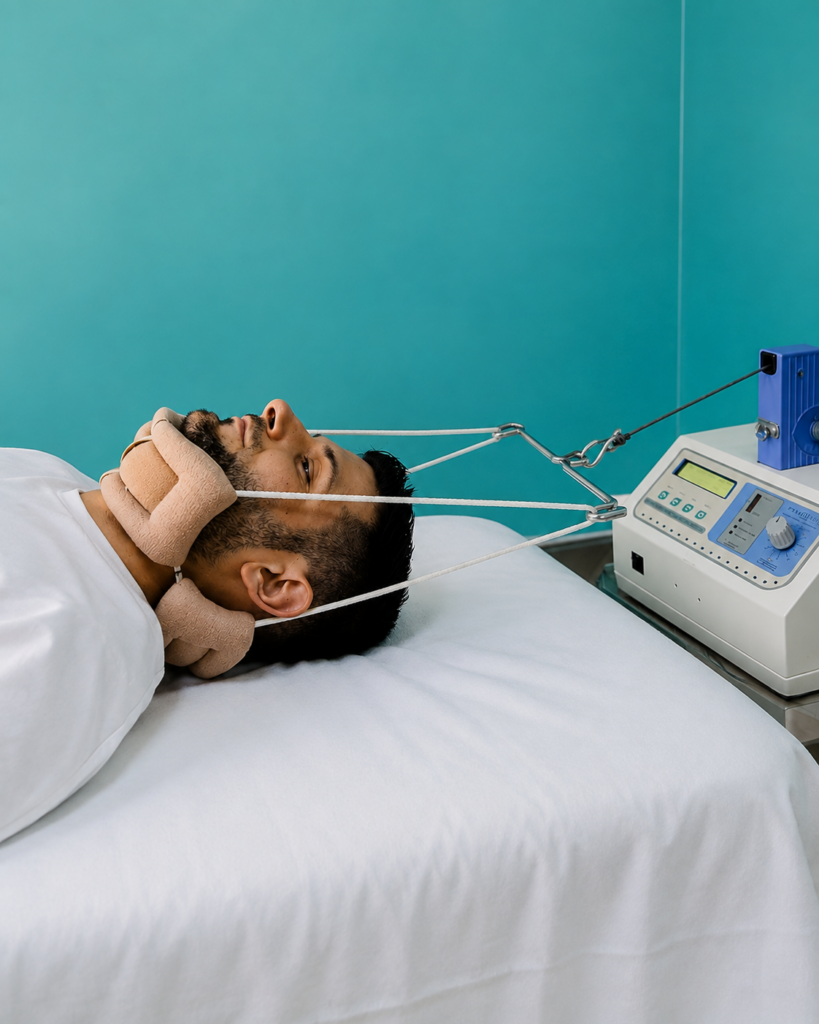
Cervical traction is applied to the neck region using a controlled pulling force. It may be considered for selected patients with neck pain, stiffness, or cervical radiculopathy.
Lumbar Traction
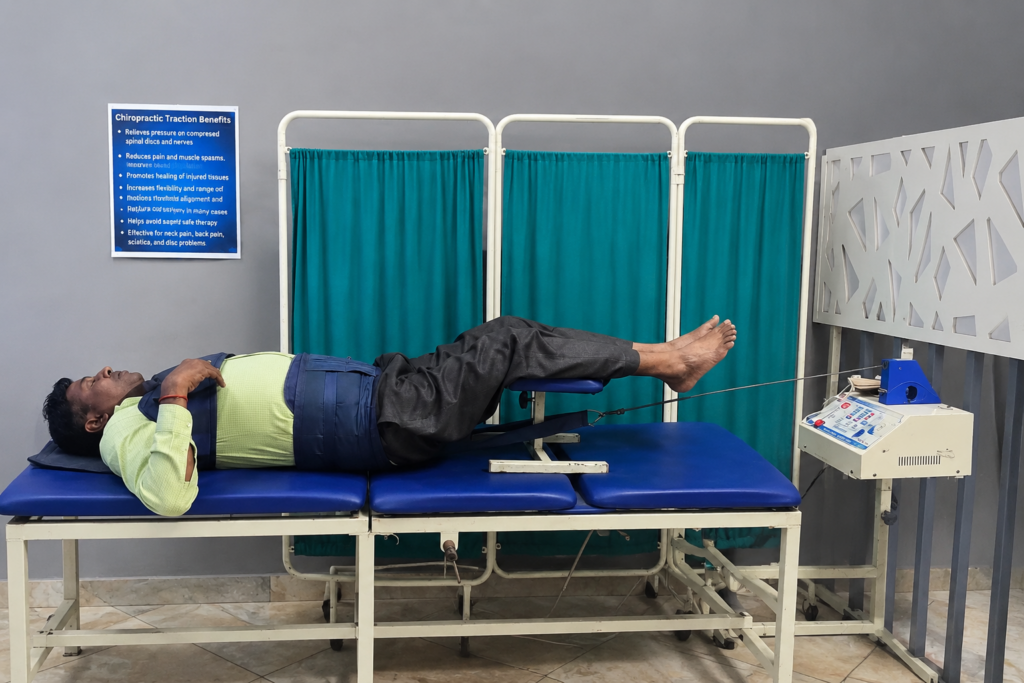
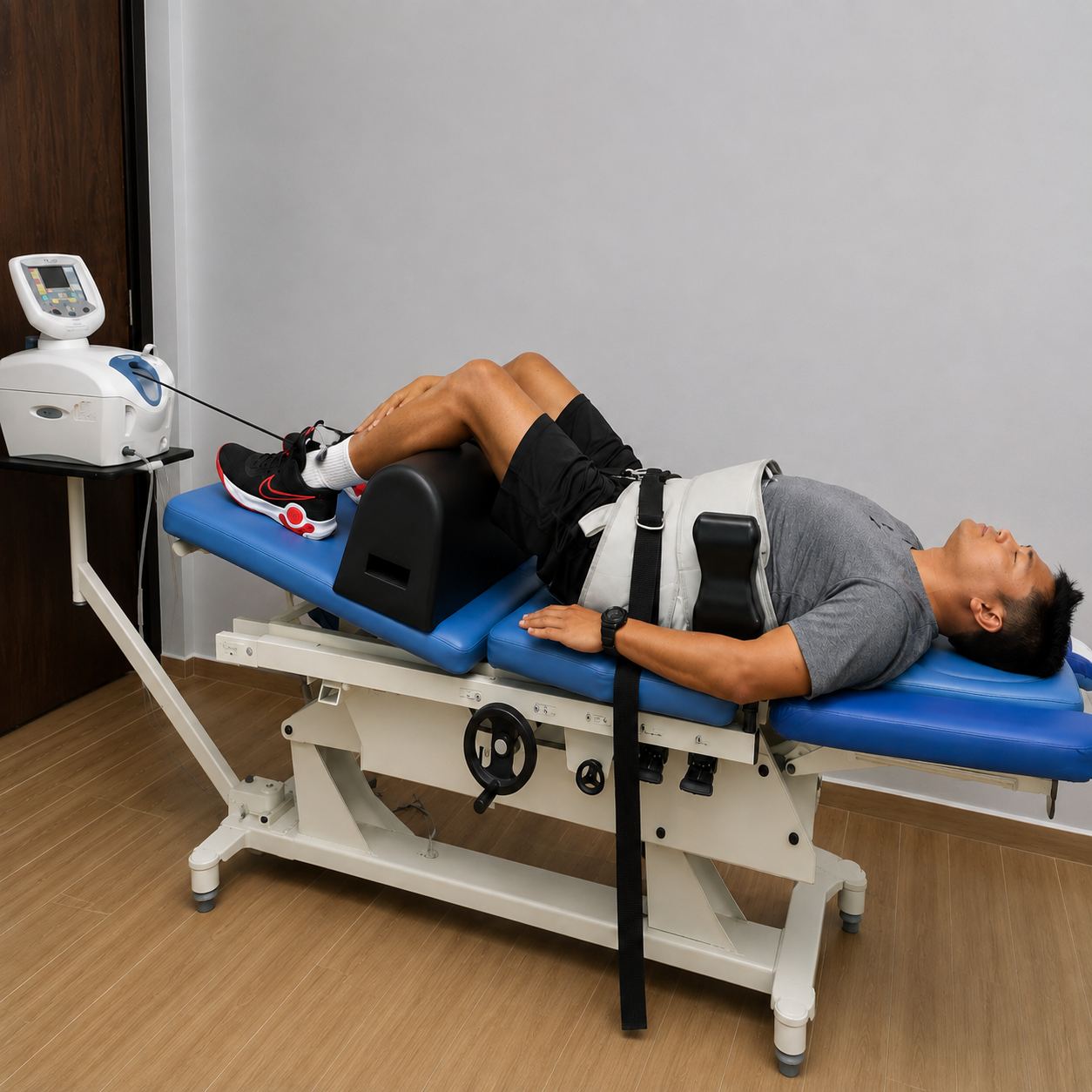
Lumbar traction applies a controlled pulling force to the lower back. It may be used as part of a rehabilitation program for selected patients with low back pain or radiating leg symptoms.
Traction is generally used together with other physiotherapy approaches such as exercises, manual therapy, posture correction, and activity modification rather than as a stand-alone treatment.
What Conditions May Benefit from Traction Therapy?
Traction may be considered as part of treatment for selected patients with:
Cervical Spine Conditions
- Neck Pain
- Cervical Spondylosis
- Cervical Radiculopathy
- Neck Stiffness
- Radiating Pain from Neck to Arm
- Certain Cervical Disc
Common Symptoms That May Be Associated With Spine Problems
Neck Pain and Stiffness
Pain or stiffness around the neck that may become worse after prolonged sitting, computer work, or certain movements.
Pain Radiating to the Arm
Some cervical conditions can cause symptoms that travel from the neck toward the shoulder, arm, or hand.
Lower Back Pain
Pain or stiffness in the lower back that may occur after sitting, standing, bending, lifting, or prolonged activity.
Leg Pain or Sciatica
Pain, tingling, numbness, or other symptoms may sometimes travel from the lower back into the buttock or leg when a nerve root is irritated.
Reduced Spinal Mobility
Spinal stiffness may make bending, turning, walking, or maintaining a comfortable posture difficult.
Cervical Traction Therapy
Cervical traction focuses on the neck region and may be used for selected patients with neck-related pain or nerve symptoms.
During cervical traction, the patient’s head and neck are positioned comfortably while the machine applies a controlled pulling force.
The amount of force, duration, position, and treatment intensity are adjusted according to the patient’s condition and response.
Cervical Traction May Be Considered For:
- Cervical Radiculopathy
- Neck Pain
- Cervical Stiffness
- Selected Cervical Disc Problems
- Nerve-Related Arm Symptoms
- Certain Mechanical Neck Conditions
A physical therapist should determine whether cervical traction is appropriate after clinical assessment.
Lumbar Traction Therapy
Lumbar traction focuses on the lower back and may be used in selected patients with low back or radiating leg symptoms.
The patient is positioned securely on the traction table, and the machine applies a controlled pulling force to the lumbar region.
The treatment parameters are individualized according to the patient’s symptoms, examination findings, and tolerance.
Lumbar Traction May Be Considered For:
- Low Back Pain
- Lumbar Radiculopathy
- Sciatica
- Selected Disc-Related Conditions
- Lumbar Stiffness
- Certain Mechanical Low Back Conditions
Traction should be selected on an individual basis because evidence does not support using it routinely for every person with low back pain.