Best Sciatica Treatment in Ghaziabad

Best Sciatica Treatment in Ghaziabad– Our Treatment Approach
according to the patient’s symptoms and condition.
- Sciatica is a common but often debilitating condition that disrupts daily life—causing pain in the lower back, tingling in the hip, and weakness in the leg. At Spine Chiropractic Osteopathic Clinic in Ghaziabad, we offer specialized treatment for sciatica using safe and non-surgical methods to reduce pain and restore normal movement. Sciatica can be caused by various factors, including herniated discs, spinal stenosis, or piriformis syndrome. If left untreated, it can lead to chronic pain, stiffness, and further limitations in mobility.
Our approach to relieving sciatica pain is different – we don’t just mask the symptoms, but address the root cause of the pain. This involves a combination of chiropractic adjustments, physiotherapy, manual therapy, and posture correction – all working together to realign the spine and reduce pressure on the sciatic nerve. This promotes faster healing and reduces the risk of future pain recurrence. We also incorporate exercises to strengthen muscles, improve flexibility, and teach lifestyle modifications to ensure long-term relief and a healthy spine.
If you’re experiencing symptoms of sciatica, such as lower back pain, leg pain, or numbness, don’t wait for the pain to worsen. Contact Spine Chiropractic Osteopathic Clinic today and book a consultation with one of our specialists. With the right treatment, you can return to a pain-free and active life—just take the first step.. this is our
What causes sciatica to start?
Spondylolisthesis
Spondylolisthesis occurs when one vertebra slips forward over another, which can put pressure on the sciatic nerve. This can cause lower back pain, leg weakness, and significant difficulty with movement.
Piriformis Syndrome
Piriformis syndrome occurs when the piriformis muscle, located near the hip, compresses the sciatic nerve. This causes pain, tingling, and numbness, which often radiates down the back of the leg.
Spinal Stenosis
In spinal stenosis, the spinal canal narrows, putting pressure on the spinal cord and sciatic nerve. This can cause pain, tingling, or weakness in the lower back, hips, and legs.
Herniated disc
A herniated disc occurs when the soft inner portion of a spinal disc bulges out or ruptures. This puts pressure on nearby nerves—especially the sciatic nerve—which can cause pain, numbness, or weakness in the lower back and legs.
When should you see a doctor for sciatica?
Sciatica is a problem related to the sciatic nerve that can cause significant pain and discomfort. Mild symptoms sometimes resolve with rest, but if the pain persists or becomes very severe, it’s important to see a doctor.
What symptoms are seen in sciatica?
- Pain that starts in the lower back and radiates down one leg.
- Sharp, shooting, or burning pain in the hip, thigh, calf, or foot.
- Tingling or numbness in the leg, ankle, or toes.
- Weakness in the leg, making it difficult to walk, stand, or climb stairs.
Which symptoms require immediate medical attention?
- Weakness in the leg that makes it difficult to move or control it.
- Foot drop—the inability to lift the front part of the foot.
- Numbness felt in the groin or around the private parts.
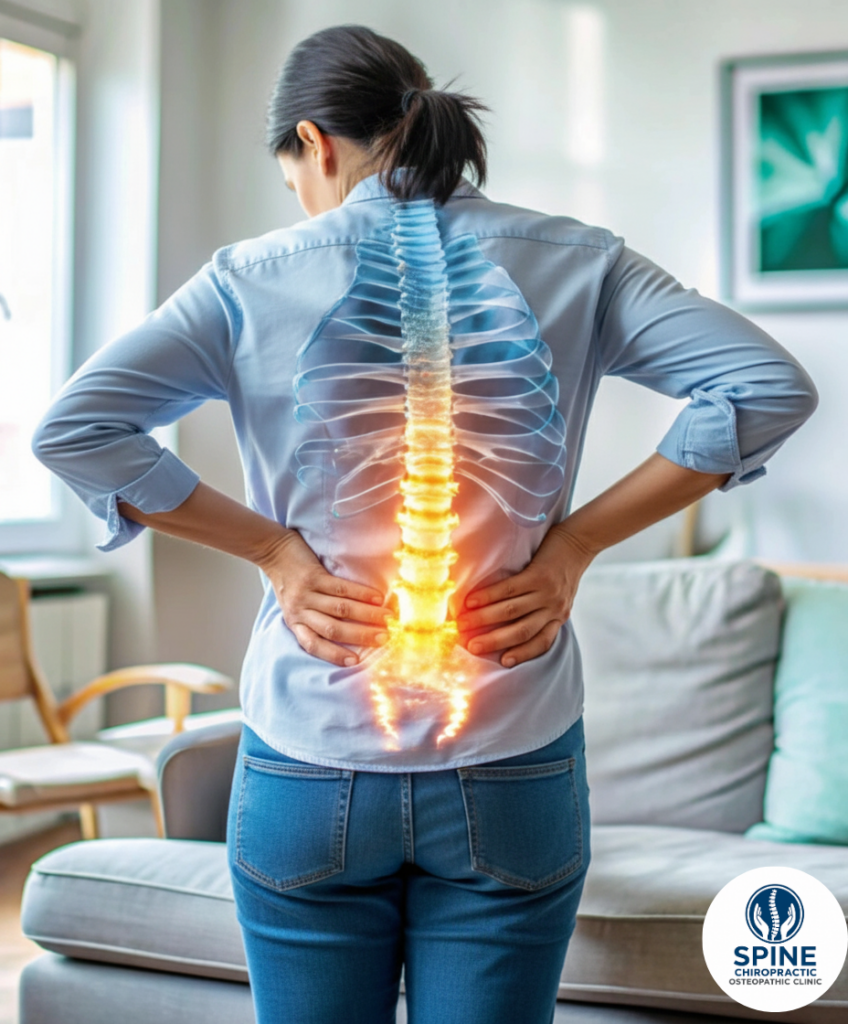

Effective Sciatica Treatment at Spine Chiropractic Osteopathic Clinic
We offer specialized, non-surgical treatment for sciatica that focuses on providing long-lasting relief. Our expert chiropractors and physical therapists work to address the root cause of your pain—whether it’s a herniated disc, spinal stenosis, or piriformis syndrome. This not only reduces pressure on the nerve but also restores your mobility and minimizes the likelihood of future pain.
Our treatment methods include
- Chiropractic adjustments: Corrects spinal misalignment, reducing pressure on the nerves.
- Physiotherapy: Helps strengthen muscles, increase flexibility, and accelerate the body’s natural healing process.
- Manual therapy: Reduces muscle tension and improves blood circulation.
- Posture correction and ergonomic advice: Corrects poor habits and reduces unnecessary stress on the body, preventing recurrence of the problem.
- Pain management techniques: Safe methods for controlling pain and inflammation without medication.
Our specialists create a personalized treatment plan based on the severity of your problem, ensuring that your treatment is both safe and effective, with quick results. according to the patient’s symptoms and condition home page
How to Avoid Sciatica – Easy Tips for a Healthy Spine
To prevent sciatica, it’s essential to keep your spine strong and flexible. Small daily habits—like maintaining good posture, staying moderately active, and lifting objects correctly—reduce pressure on the nerves and keep the sciatic nerve healthy. This also reduces the likelihood of future pain episodes.
1. Maintain Good Posture
Sitting and standing straight reduces pressure on the spine and prevents irritation of the sciatic nerve. Try using an ergonomic chair and lumbar support to keep your spine in the correct position.
2. Stay Active and Strengthen Your Core Muscles
A little daily walking, yoga, or core-strengthening exercises can strengthen your lower back. This significantly reduces the chances of sciatica flare-ups.
3. Avoid Prolonged Sitting
Sitting for extended periods increases pressure on the sciatic nerve. Get up and walk around, stretch, or simply move a little every 30 minutes. This also improves blood circulation.
4. Lift Objects Correctly
When lifting heavy objects, bend your knees and squat down instead of bending from your waist. This reduces strain on the lower back and can prevent sciatica pain caused by spinal misalignment or nerve compression.
Frequently Asked Questions
What are the main causes of sciatica?
Sciatica is often caused by excessive pressure on the sciatic nerve due to a slipped/herniated disc, spinal stenosis, piriformis syndrome, spondylolisthesis, or poor posture and injury.
How long does sciatica pain last?
In mild cases of sciatica, proper rest and treatment can provide relief within a few weeks, while in more severe cases, the pain can last for months. Starting physiotherapy and chiropractic care early can speed up the recovery process.
Can sciatica be treated without surgery?
Yes, most cases of sciatica improve without surgery. Chiropractic adjustments, physiotherapy, manual therapy, and posture correction can reduce pressure on the nerve and provide pain relief.
When should you see a doctor for sciatica?
If sciatica pain is very severe, lasts for more than a few weeks, causes weakness in the leg, or results in numbness in the groin area or difficulty with bladder/bowel control, you should consult a doctor immediately.
How can sciatica be prevented from recurring?
Maintaining correct posture, exercising regularly, avoiding sitting for long periods, and using proper technique when lifting weights reduces the chances of sciatica recurring and keeps the spine healthy.